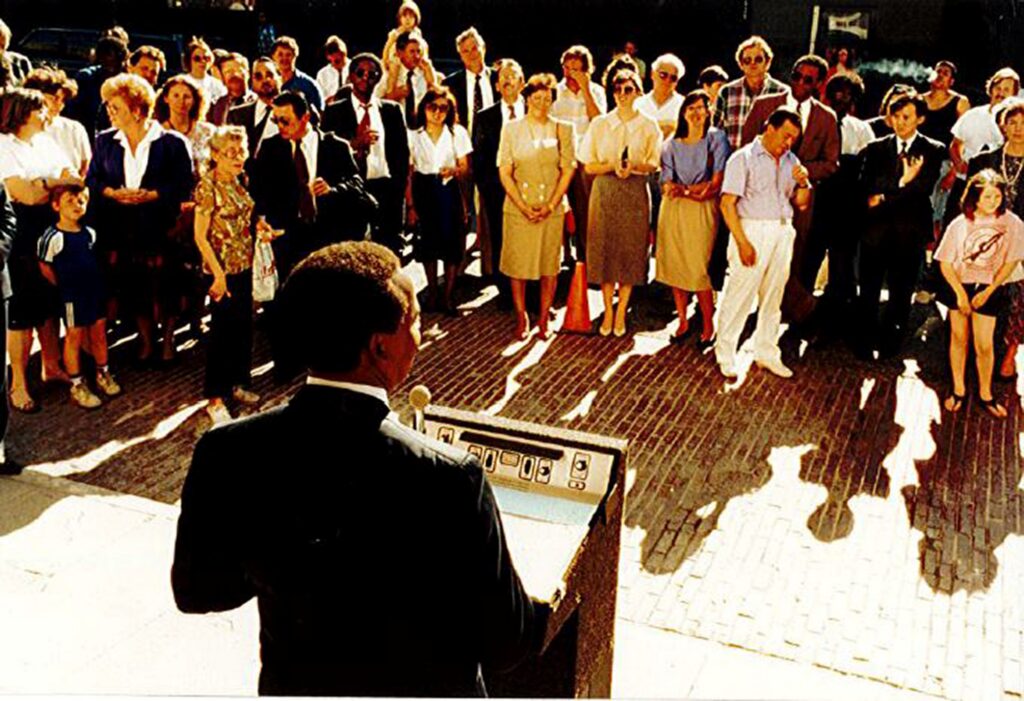
In Washington, public development authorities are unique, independent organizations legally separate from local governments. They are not private, for-profit companies; however, they are equipped to carry out public objectives with a degree of freedom akin to private corporations or nonprofits. A public development authority is a “public corporation” created to address a community’s needs.
The Washington State Legislature approved the creation of PDAs by towns, cities, and counties in the 1970s. PDAs are formed to fulfill specific objectives, like developing a project, such as the Meydenbauer Center in Bellevue, administer grants like King County’s 4Culture, preserve historic landmarks like Pike Place Market, or operate housing, like Community Roots. Some PDAs are created for ongoing work, while others are created for a specific project and dissolve when that work is complete.
PDAs are governed by a unique charter specific to their role within a community. Each PDA is governed by a volunteer board of directors which set policy, oversee staff, and guide the organization’s work. PDAs are often created to conduct work backed by cities or counties but are not directly managed by them. Since they are legally separate, PDAs manage their own debts, obligations, and liabilities.
How do PDAs work?
1) A city, town, or county creates a PDA for a public purpose
The local government that forms the PDA controls and oversees its high-level operations. However, the forming government is not required to oversee day-to-day operations or confirm a board’s involvement to ensure a PDA is fulfilling its objectives and complying with their public obligations.
2) A PDA has its own charter and volunteer board of directors
A charter is essentially a rulebook for how an organization will be structured and operated. It is a legal document that outlines the number of board members, officers, terms, and who must be represented. Board members are nominated and appointed as outlined in their organization’s charter document. Like any organization, a PDA’s effectiveness depends in part on the strength and engagement of its board.
3) A PDA provides services within a specific geographic area
PDAs are formed to assist a specific geographic area, such as a city or county. Sometimes PDAs can expand outside of the original area with permission, but it must maintain the goal or authority within the scope of its original charter.
4) A PDA is sustained through various revenue and funding streams
PDAs are sustained through self-generated revenue, grants, public funding, private funds, and donations. They can also accept real or personal property, borrow money, and issue bonds. PDAs do not have the power to levy taxes or acquire property through eminent domain.
5) A PDA is subject to the general laws that regulate local governments and government officials
Even though PDAs operate independently of city and county governments, they are still subject to public accountability laws, including state rules on audits, public records, open meetings, and ethics.
Seattle’s affordable housing PDAs
This organizational structure may sound abstract, but public corporations shape many of the places and services people rely on every day. In Seattle, there are four public development authorities that own and operate affordable housing, each with a unique approach and scope of work.
Pike Place Market Preservation & Development Authority
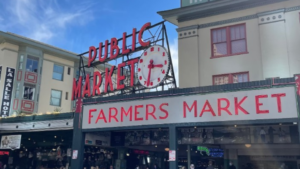 The Pike Place Market PDA owns and preserves the majority of the Market and manages day-to-day activities to support hundreds of farmers, craftspeople, and small businesses. Pike Place Market also manages four affordable housing and HUD-subsidized buildings on site.
Seattle Chinatown International District Preservation and Development Authority (SCIDpda)
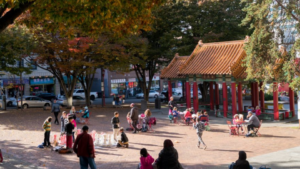 SCIDpda is a community development organization whose mission is to preserve, promote, and develop the Seattle Chinatown International District (CID) as a vibrant community and unique ethnic neighborhood. They do this by providing services in affordable housing and commercial property management, real estate development, community economic development, and community engagement.
Community Roots partnered with SCIDpda to open 13th & Fir in 2023, adding 156 units of affordable housing to the Yesler Terrace neighborhood. In 2027, Community Roots, SCIDpda, and YouthCare will open the Constellation Center and 84 affordable apartments in Capitol Hill.
Community Roots Housing
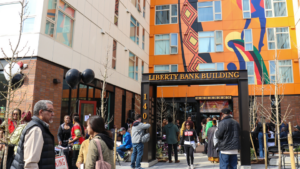 Community Roots was built on the premise that everyone should be able to live affordably in their neighborhood, in their community. Founded in 1976, Community Roots Housing has spent the last 50 years growing and responding to the changing needs of Seattle by providing affordable housing. Today, Community Roots owns and operates over 40 buildings home to nearly 2,500 residents in Seattle and White Center.
Seattle Social Housing Public Development Authority
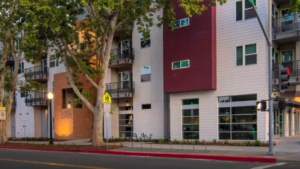 Seattle Social Housing is a new public development authority created in 2023 to provide housing to low-income households and those who can’t afford market-rate housing but earn too much to qualify for affordable housing.
Why are PDAs important?
Public development authorities create a bridge between public purpose, practical tools, and experienced implementation.
PDAs are dedicated to serving a specific mission with public oversight. As a public corporation centered around a specific goal, they provide a level of efficiency, attention, and adaptability to get community projects done, with direct input from the communities they serve. Unlike city or county governments, they can blend federal funds and local taxes with private donations to maximize project funding and increase their impact.
Public development authorities matter because they help cities and counties take on large, long-term challenges with focus, flexibility, and public accountability. As Seattle continues to face a housing crisis, PDAs play an important role in creating and preserving affordable housing, protecting community assets, and keeping work rooted in local needs. At a time when many King County residents are being priced out of their communities, public development authorities can help keep neighborhoods within reach.