Preservation is important because it prevents the loss of affordable housing stock over time, which is essential to addressing the housing crisis.
What is the preservation of affordable housing?
Affordable housing preservation means managing buildings to ensure they remain safe and affordable for the people who call them home.
There are two ways affordable housing can be preserved:
1. Keep rents low
The first is extending the “rules” that keep rents low. Many affordable housing developments use government funding that requires rent to stay at a certain level for a period of time. When that period ends, the property owner must extend the affordability requirements to preserve those units as affordable housing. This is common for market-rate developers who include a mix of affordable housing with market-rate or luxury housing in their new building construction to keep costs low.
2. Restore and rehabilitate affordable apartments
The other method of preservation is rehabilitation and restoration of physical buildings. As buildings age, they face a wide range of issues. This can include deteriorating roofs, plumbing failures, worn interiors, and structural damage. All of which require repairs to address the life and safety of residents.
Community Roots Housing is an affordable housing provider; our preservation work is focused on maintaining and rehabilitating our buildings.
Why is preservation important?
The need for preservation of affordable homes in King County, Washington
According to the Regional Affordable Housing Task Force, King County currently needs approximately 173,000 additional affordable homes by 2040. There is also a significant shortage of affordable homes available right now for extremely low-income households.
With such a substantial need, King County cannot afford to lose existing affordable housing units. This makes preservation even more important. Much of Seattle’s current affordable housing is in neighborhoods with desirable amenities, such as parks, schools, grocery stores, and services. Because of high land prices in the region, it is extremely difficult to find locations for new buildings that are as affordable as the ones we already have.
It is cheaper to maintain existing affordable housing than to build new units
It is far less expensive and more environmentally friendly to preserve a unit of affordable housing than it is to build a brand new one. New construction can cost more than $300,000 per unit, while apartments can be rehabbed and preserved for under $60,000 per unit. Renovating existing housing also helps to preserve neighborhood character and maintain the sense of connection and belonging people feel in their communities that have built over decades.
How does preservation work?
Tracking the conditions of buildings
When a new building is completed, or an old one is acquired, the building enters an ongoing asset management cycle. This means that property owners regularly track the condition of major building systems to ensure they are maintained over time. Roofs, plumbing, heating systems, etc., all have a “useful life” which is an estimate of how long they are functional and effective. At the end of a useful life, those systems need to be repaired or replaced to keep the building in good condition. In some cases, the building is so old that a full gut rehab is required to address decades of disrepair or aging systems.
Community Roots continually assesses our buildings within this asset management cycle. The majority of our buildings are aging, with many over 50 years old. While they contribute to the character and charm of their neighborhoods, theses buildings increasingly require major repairs to stay functional. Because we offer deeply affordable rents, the costs of these repairs often outpace available funding from rental income.
Funding the needed repairs
Preserving affordable housing usually starts with identifying the need and then finding the right mix of funding, which is often the hardest part of the process. Just like new construction, preservation work rarely relies on a single source of funding and instead is pieced together from multiple revenue streams. This can include local, state, federal, and private grants and loans, all layered to cover the cost of repairs.
Community Roots’ approach to rehabilitation prioritizes life and safety issues, ensuring that we address those needs as quickly as possible. We then balance costs, urgency, and feasibility to determine which repairs can be completed within the very limited budget and resources that are available.
Real examples of rehabilitation projects by Community Roots Housing
Over the last decade, Community Roots has rehabilitated 10 buildings and preserved nearly 400 affordable apartments. Our most recent preservation projects include:
The Devonshire
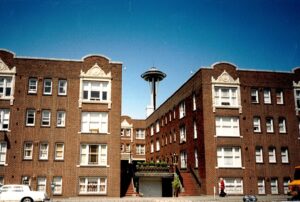 The Devonshire, built in 1925, underwent a complete gut rehabilitation to address decades of overdue renovations and system updates. In partnership with the City of Seattle, the 100-year-old building received plumbing, roofing, electrical, seismic, and interior upgrades in 2024. This historic building offers 62 apartments for residents earning 50-60% of the area median income (AMI) in Seattle’s Belltown neighborhood.
The Bremer
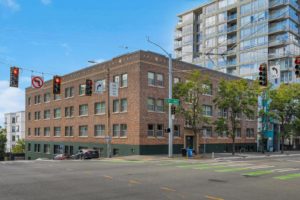 The Bremer, also located in Belltown, was built in 1924 and features 49 apartments for residents earning 50-60% AMI. In 2021, all the units were remodeled and upgraded to modern finishes. In addition, the Bremer received an intensive seismic retrofit and upgrades to the building’s systems.
Upcoming preservation projects for Community Roots include decarbonization work at the Oleta, improvements to the stairways and decks at the Helen V, and plumbing and system upgrades at the Harrison on 15th, the Villa, and the Fleming Apartments.
Preservation safeguards existing affordable homes, combats displacement, and ensures these vital public assets are maintained for future generations. It is the most effective and efficient way to protect current affordability while we continue to invest in new housing development to meet the housing shortage.