Fifty years ago, Community Roots Housing began with a simple idea — to help our neighbors stay rooted in their homes. What began in 1976 as the Stevens Neighborhood Improvement Program (SNIP) has grown into a commitment to confront inequity by creating affordable housing.
As part of our anniversary, we are revisiting and sharing some of our historic moments.
The 1980s marked a turning point in how people lived in Seattle. Low-income residents who had once been homeowners increasingly found themselves becoming renters as economic pressures and changing neighborhoods reshaped the city.
In response to gentrification, beginning in 1982, SNIP focused on acquiring, preserving, and improving affordable homes beyond the Stevens Neighborhood. In 1983, SNIP changed its name to Capitol Hill Housing Improvement Program (CHHIP) to more accurately reflect its shift in priorities. Today, we serve more than 2,400 households across 40+ properties around the Seattle area.
The early years of the Bremer
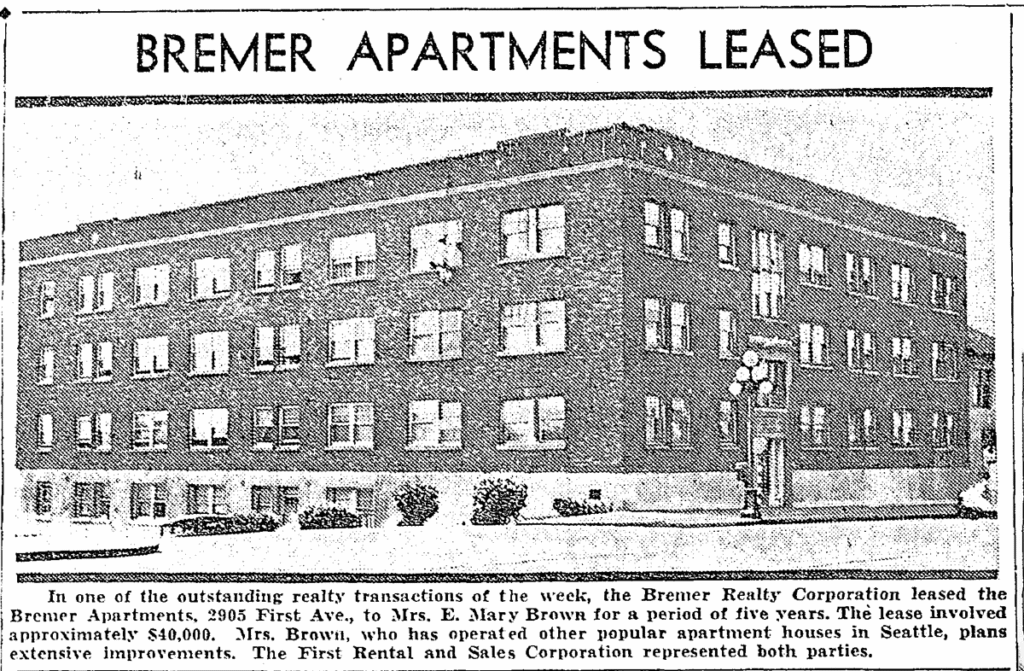
1987 marked our first sizeable building acquisition — the Bremer Apartments with 49 units. The Bremer itself dates back much further. It was built in 1925 in Seattle’s Belltown neighborhood, just north of downtown. It was originally designed by architect Max Allen Van House for client George Bremer, who secured a $60,000 building permit that year to begin construction.
A city in transition
Seattle’s economy used to look very different from how it does today – in the 1980s it was still defined by its aerospace, forestry, timber and fishing industries. During that time, the Bremer served as an entry point into the city and became home to renters who were building their careers and finding their footing in the Emerald City.
As the cost of living climbed in the late 1980s, homeownership became increasingly unaffordable for many. Rising housing costs meant more Seattleites were renting rather than buying, leaving them vulnerable to displacement. Meanwhile, the city was facing mounting criticism for failing to uphold its pledge to preserve 7,311 affordable housing units downtown; by the end of the decade, that number had fallen to around 5,900.
Recognizing the urgent need, Community Roots Housing — then known as CHHIP — stepped up. CHHIP committed itself to preserving and creating affordable housing at a moment when the city’s landscape was rapidly changing.
Opening doors when housing was needed most
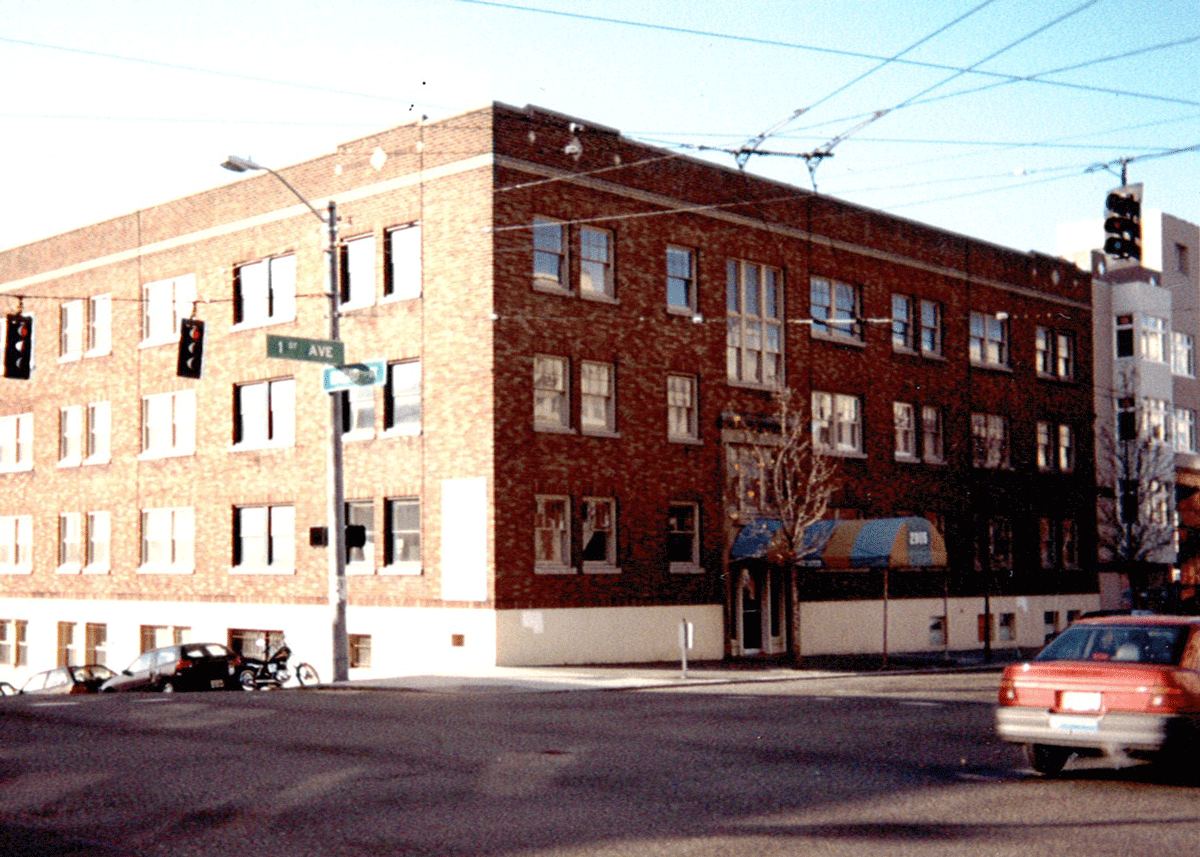
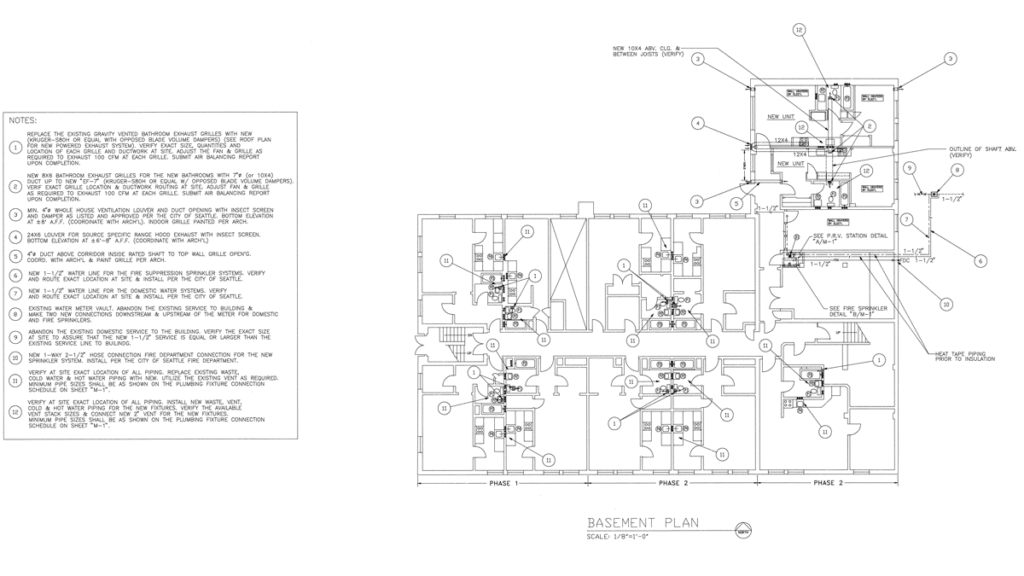
After CHHIP acquired its first large apartment building, the Bremer, it oversaw a minor rehabilitation in 1992. At that time, the renovation included new plumbing systems and fixtures, lighting, interior finish improvements, and energy-efficient window upgrades. Like many nonprofit housing agencies, CHHIP deepened its neighborhood roots in the late 1980s as federal housing funding declined.
As Seattle entered the 1990s, the pressures that were reshaping the city continued. Older apartment buildings like the Bremer remained an essential part of the affordable housing landscape, offering access to centrally located neighborhoods that were becoming harder for low-income renters to access. As these buildings aged, a new reality emerged: preserving affordability also meant preserving the buildings themselves. What had once been valued for durability and historic character would soon be tested by a force few fully understood.
Exposing the risk of unreinforced masonry
 Not much was known about the seismic risk from the Cascadia Subduction Zone in Seattle, let alone the Seattle Fault, when the Bremer was built in 1925. Brick was the material of choice for large buildings during this period because it was inexpensive, fire-resistant, and could withstand significant weight.
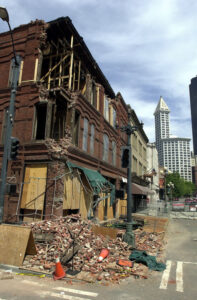
On February 28, 2001, the 6.8 magnitude Nisqually earthquake shook the region. It injured 400 people and caused $2 billion in property damage in Seattle. The impacted buildings had something in common: two-thirds were made of old, unreinforced brick and mortar.
In a large earthquake, buildings with “unreinforced masonry” have nothing holding their heavy brick walls in place. During a seismic event, the brick could pull away from the building, leaving it unable to support the roof or floors attached to it. In 2016, the City of Seattle released a list of Seattle buildings that fit this classification, called the Unreinforced Masonry (URMs) List. Two years later, the nearly 100-year-old Bremer was added to it as “high risk.”
Securing the Bremer for generations to come
A seismic retrofit for the future
In 2019, the City of Seattle partnered with Community Roots Housing and Washington State Office of Emergency Management (OEM) to apply for a FEMA grant to fund the seismic retrofit of the Bremer. This was the first time OEM has applied for a grant on behalf of a community partner. The city was awarded a $5 million FEMA Hazard Mitigation grant in May 2020 for the project.
Community Roots took this opportunity to address significant deferred maintenance, upgrade to current energy and building codes, and prevent potential structural failure due to unreinforced masonry through complete rehabilitation.
“Down to the studs”
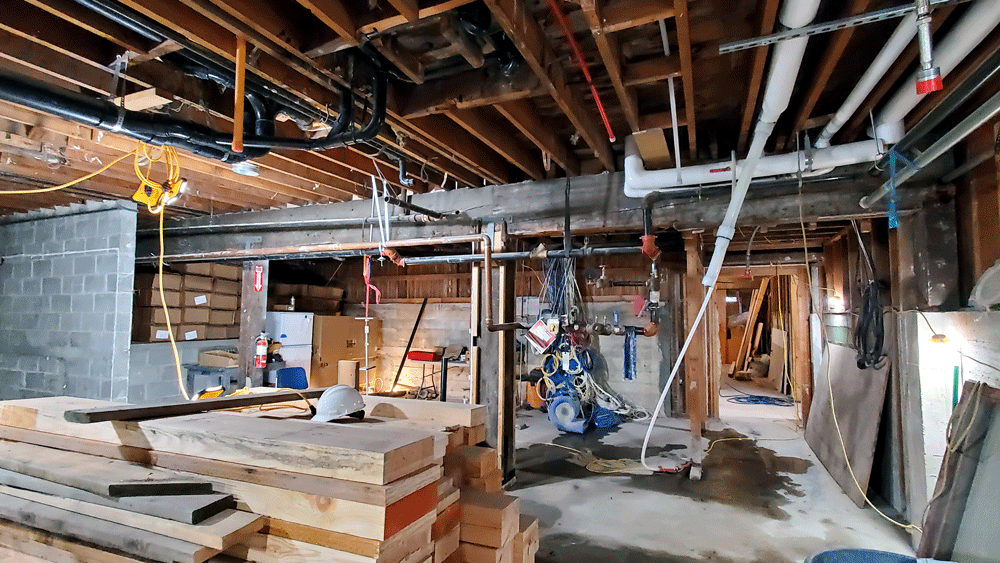 The rehabilitation “tore the Bremer down to the studs,” as described by Community Roots Housing Manager of Design & Construction, Lee Stanton. The rehabilitation was extensive. It began during the COVID-19 pandemic in January 2021 and lasted 14 months. During that time, a substantial alteration and voluntary seismic retrofit was completed. Building improvements included removing and upgrading:
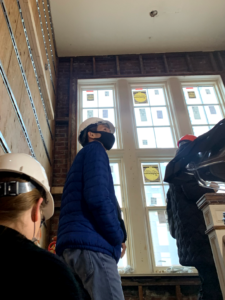
- Walls and insulation
- Electrical system, including new wiring and panels
- Plumbing distribution systems
- Hot water and ventilation systems
- Existing brick and mortar
- Windows and frames with high-performance windows
- Roof (to meet modern energy codes)
- Heating and mechanical equipment (reconfigured the entire hydronic system that circulates hot water through radiators)
- Sleeping closets (which were turned into regular closets)
Rebuilding with residents in mind
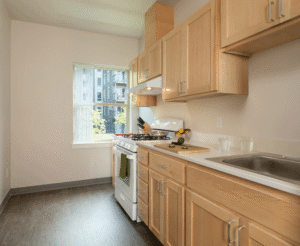 At the unit level, each of the Bremer’s 49 apartments were upgraded with new cabinetry, flooring, doors, hardware, lighting, and plumbing fixtures. To make those improvements, Community Roots temporarily relocated residents to nearby market-rate apartment buildings for up to a year. When the rehabilitation was completed in August of 2022, residents were welcomed back to a brand-new home.
Preserving history while protecting homes
In 2022, the Bremer received a Historic Seattle Award for Outstanding Stewardship. Historic Seattle’s annual preservation awards showcase and celebrates exceptional projects that preserve and protect Seattle’s built heritage. Historic Seattle recognized that the renovation of the Bremer was done with extreme care and dedication to retain the building’s historic character. The new windows and frames were historically accurate, the lobby terrazzo and main stairway were preserved, and the two-tone paint with chair rails were restored in the halls.
Why preservation still matters
Belltown, like so many neighborhoods in the Seattle area, is seeing increased development and rising housing costs. Investments in the rehabilitation of the Bremer — both in 1987 and 2022 — demonstrate how preserving historic buildings maintains neighborhood character while protecting our existing stock of affordable housing. It helps keep central neighborhoods with jobs and services within reach of people of all incomes.
Preservation projects not only safeguard and improve the life and safety of the people who call them home, but they also benefit the wider community. Over the past decade alone, Community Roots has renovated more than 400 apartments across ten buildings, ensuring they remain safe, affordable homes for generations to come.