The Low-Income Housing Tax Credit (LIHTC) program is the primary policy and financial tool for building affordable housing for people with low incomes in the United States. Instead of the federal government paying the full cost of construction directly, it creates tax credits for affordable housing developers that they can then use to attract investors. The money from investors helps pay for new buildings and major renovations. LIHTC makes the development of more affordable housing possible.
What is LIHTC?
The LIHTC program provides tax incentives to support the purchase, construction, and renovation of affordable rental housing for low-income households. LIHTC was originally enacted as part of the 1986 Tax Reform Act to encourage private investors to participate in affordable housing development. Since its creation, the LIHTC program has generated over 3.5 million units of affordable housing across the U.S and is the federal government’s primary tool for promoting affordable housing development.
How does LIHTC work?
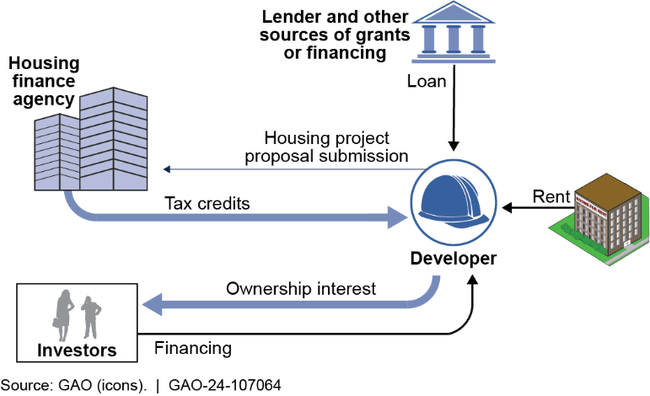
Affordable housing is expensive to build. LIHTC helps developers attract investors, reducing the need for private loans and stretching limited public dollars further.
Because rents are kept affordable, tenant rent payments do not cover the full cost of creating and maintaining these homes. City and county agencies often support affordable housing projects in their communities, but they have limited budgets. Even when developers and local governments work together, they often lack sufficient resources to fully fund projects. This is especially true in major metropolitan areas where the costs of land, materials, and labor are high. The result is a financial shortfall between the funding required to complete a project and the money available to the developer.
LIHTC helps close the funding gap
The federal government issues tax credits to states. The states then award them to a limited number of affordable housing developers, such as Community Roots Housing, whose projects help meet public goals.
Affordable housing developers need upfront funding to build and preserve housing. As a result, they use tax credits to attract outside investors, such as banks or large corporations. Investors provide capital to support the construction of affordable housing and, in exchange, receive a reduction in their federal taxes for 10 years.
Tax credits help developers offset the costs of building affordable housing
This private investment reduces the amount the developer needs to borrow from financial institutions and helps stretch limited public funding further. As a result, more affordable housing can be built or preserved than public funding and rents alone could support.
The role of private investors in LIHTC-assisted affordable housing
To receive the tax benefits, investors usually become limited partners in the project, meaning they have ownership but no role in day-to-day management of the property. This reduces the need for costlier project financing methods (e.g., bank loans). Investors provide capital before construction begins. The affordable housing developer is responsible for building, managing, and keeping the property in compliance.
Unlike a market-rate apartment building, investors do not profit from the operation of an affordable apartment building (e.g. rents). This is because affordable housing limits rents and does not have a profit opportunity. The draw of the LIHTC program is the tax benefit from purchasing credits from affordable housing developers. LIHTC creates a financial incentive for investors by providing an opportunity for a return on their investment through tax reduction. Additionally, if the investor is a financial institution, it counts positively toward their Community Reinvestment Act (CRA) ratings, which creates additional incentives for them to participate.
Investors can begin to claim the tax credits once a housing project is completed and residents can move in. Credits are typically claimed over 10 years, but the property must provide affordable rents for at least 30 years. The rules do not end when the building opens. Property owners, like Community Roots Housing, must continue proving that apartments are rented to income-qualified households at restricted rents during this period.
How does LIHTC affect rent?
LIHTC-funded apartment rents are based on three main factors:
- Household size
- Apartment size
- Area Median Income (AMI)
Area Median Income (AMI) is the median or midway point of all incomes in a region, meaning half of households earn more and half earn less. AMIs are determined regionally by the federal Department of Housing and Urban Development (HUD). In Seattle, AMI is based on the annual household income of the residents of King and Snohomish counties.
Apartments funded through LIHTC serve people earning between 30% – 60% AMI, with most apartments serving those making no more than 60%. Only households with incomes below the income limit are allowed to live there. LIHTC rules cap rent at an amount considered “affordable” for a household earning the maximum allowed income
How are LIHTC-assisted affordable housing projects different from public housing?
LIHTC-funded affordable housing is different from programs like public housing or HUD Section 8 vouchers. In those programs, tenant rents are scaled to be no more than 30% of a household’s actual income. The federal government pays the difference between the household’s rent payment and the unit’s defined “fair market rent.”
While LIHTC rents are restricted, they are not always affordable for every household. Rents are capped at a maximum monthly amount but can be lowered based on additional factors. However, the renter can pay more than 30% of their income towards rent.
Where does LIHTC fall short?
While LIHTC has successfully created and preserved affordable apartments for decades, it faces criticism for its unrealistic limitations on affordability. The apartments must remain affordable for only 30 years. Moreover, despite reduced rents, households with the lowest incomes (under 30% AMI) often cannot afford them without additional assistance.
Why is LIHTC important for creating and maintaining affordable housing?
With lower financing costs, affordable housing developers can charge below-market rents while still generating the funds needed to operate and maintain the building. Private investment reduces the amount the developer needs to borrow from financial institutions and helps stretch limited public funding.
Further, as part of the program criteria, LIHTC-assisted units must remain affordable for at least 30 years. To live in an LIHTC unit, all residents must meet income eligibility requirements upon move-in. Additionally, each year of their residency, they must continue to submit income verification.
LIHTC supports Seattle’s affordable housing development
In Seattle, LIHTC has helped affordable housing providers create new homes and preserve older buildings that might otherwise be lost to the private market. For example:

In 1992, Community Roots Housing completed one of the first projects in Seattle to use the LIHTC program. When the Larned Apartments opened over 30 years ago, the three-story building included a commercial art gallery and provided housing for fast-food workers, retail clerks, taxi drivers, janitors, and others working minimum wage jobs and receiving public assistance.
LIHTC is not a simple program. However, it is the most accessible and most used policy tool for encouraging affordable housing development. It helps providers like Community Roots Housing build and preserve homes that would not be possible through rents and public funding alone. It keeps rents below market rate for 30 years, helping create stability for working families and individuals through economic booms and busts. Since 1986, it has shaped the way affordable housing is financed and built across the country.