In 2012, Community Roots Housing launched the Resident Services department to connect residents with rental assistance, employment support, community programming, and resources that strengthen their lives beyond just housing.
The department was formed shortly after The Great Recession, which shocked housing markets in 2008, drove the unemployment rate up to 9.7%, and widened the affordability gap.
Resident Services was established during a time when rents were skyrocketing because of the tech boom of the 2010s and put pressure on longstanding communities, especially those already facing barriers to stability. The newly formed department guided those most impacted to resources and programs that supported long-term housing stability and self-sufficiency.
Today, residents continue to receive support through personal touchpoints with Community Roots staff and trusted local organizations and agencies. “We aim to teach residents how to advocate for themselves. We give them the tools to be successful,” shared Resident Services Coordinator, Sasha Ifé Sobers-Outlaw. Whether that tool is a link to community kitchen locations, an employment program, childcare referrals, or utility assistance — the Resident Services department works directly with residents and creates a safe space to have the hardest conversations.
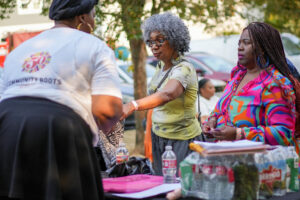
Empowering residents through resources
Those with the lowest incomes face a multitude of barriers, and those restrictions don’t simply disappear with keys to a new apartment. Building a sustainable life means having housing and access to supportive resources and programs. That’s why Resident Services is important. It’s a connection point where residents are referred to valuable systems which can ease external or financial stress and encourage them to focus on their goals.
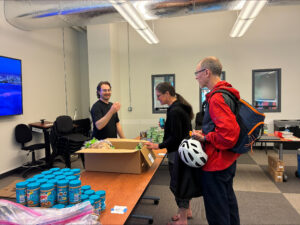
Nearly 3,000 residents have found a home with Community Roots, including families, people with disabilities, working adults, and seniors. Many face economic and systematic barriers which widen the wealth and opportunity gaps. These gaps have grown substantially in recent years; Washington state’s average and median wages have nearly doubled compared to three decades ago.
When people receive an overdue utility bill or skip putting food in their grocery cart because funds are too tight, Resident Services is there to help navigate those challenges. They provide the first, and sometimes the hardest, step for those overwhelmed by burdens — researched services and resources.
Community Roots, and other affordable housing providers, recognize the importance of connecting residents to assistance that will sustain housing security, help them build a community, and learn to advocate for themselves amidst confusing systems.
How Resident Services Works
The department works by matching a Community Roots building and its residents with a Resident Services Coordinator. Coordinators will refer residents to programs, service providers, and opportunities in the local area that will match their needs.
While Coordinators are not case managers, they will provide information and referrals. Coordinators will guide residents through eligibility requirements and connect them to a variety of resources, such as:
- Unemployment or disability benefits
- Employment opportunities and trainings
- Budgeting and financial planning resources
- Behavioral health services
- Low-cost medical services
- Substance use treatment support
- Food assistance
- Childcare services
- Education access
- Hoarding and over collecting resources
- Navigate social security or Medicare
- Low-cost or utility assistance
- Transportation support
- And more
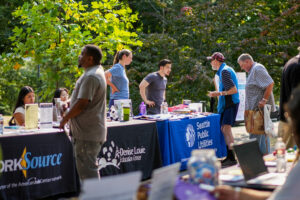
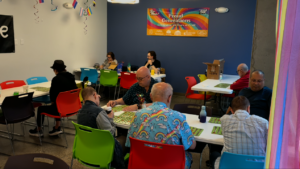
Resource fair at 50th Anniversary Resident Picnic (2026)
Over a Decade of Serving Residents

2012 – 2015
The Resident Services department was formed in 2012. The newly made program was supported by a local women led marketing firm, Golden Lasso, who donated over $1,200 to support the launch.
In those early years, the department partnered with the Washington Low Income Housing Alliance on a non-partisan voter engagement campaign. The campaign increased voter turn-out, especially in underrepresented and underserved communities.
By 2015, they had formed new partnerships with Pronto Bike Share which was Seattle’s first public bicycle-sharing system, Seattle City Light for reduced utility bills, Woodland Park Zoo for no-cost tickets, and PATH With Art for free adult art programs.
2016 – 2019
The department had grown by 2018, and it launched its first digital monthly newsletter. The newsletter kept residents up to date with the latest community event near them. Community led events like free meals and bingo nights as well as low-cost resources like Fresh Bucks vouchers for discounted groceries were shared monthly.
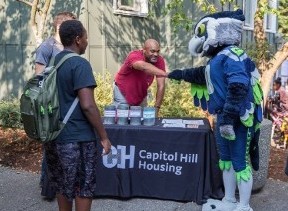
In 2018, Resident Services partnered with the Seattle Seahawks to do “Back to School Backpacks with Blitz” where they handed out 230 backpacks and school supplies to children in North Seattle, Capitol, Hill, White Center, Mount Baker, and the Central District.
The next year they expanded their educational programs and began offering a financial literacy class provided by the YWCA Economic Resilience Initiative.
2020 – 2023
The COVID-19 pandemic hit those with the lowest incomes the hardest. Community Roots is committed to supporting residents during difficult times and, at the time, provided vaccination resources and a COVID-19 Resilience Fund. The fund helped pay a portion of the residents’ rent. They also mobilized vaccine clinics to three senior buildings in partnership with Harborview and UW Medicine.
To help residents recover from the rippling effects of the pandemic, Resident Services continued to host free resume workshops, rent stabilization classes, and facilitate hot meal delivery from locally-owned restaurants with grant funding from Bank of America.
In 2023, Resident Services began placing the stepping-stones for the Resident Advisory Council (RAC), a resident-led body designed to give voice to residents and improve their quality of life. The RAC is a 16 resident member led council which helps guide community-building and advocacy.
2024 – 2026+
As the affordability crisis has deepened, prices have surged across basic necessities, childcare, and housing with an estimated 15% increase in Seattle in just one year. When the impact of high prices is great enough — especially for those living on low incomes — it can spiral into financial instability.
That is why Community Roots Housing operated two in-house rental assistance programs: the Housing Stabilization Program and the Emergency Assistance Fund. Over 100 Community Roots households and families were supported in 2025 with rental assistance. Each household in the Housing Stabilization Program was further supported through an individualized Housing Stability Plan with a Resident Services Coordinator. Coordinators helped identify and address the underlying challenges that led to financial hardship.
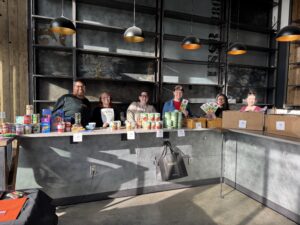
In 2025, SNAP or food stamps underwent a massive overhaul. In response to more than 4+ million people losing access to critical food aid, Resident Services piloted their first pop-up food pantry. With rising grocery prices and high recession costs across the city, the department also delivered free school backpacks straight to residents’ doors and gave back to the community with a special 50-year anniversary resident picnic.
Creating Stability Even Through Small Acts
Low-income workers, neighbors, and families are most vulnerable to Seattle’s housing and economic pressures. They are blocked from certain privileges due to financial and discriminatory barriers that don’t stop when they move into a new apartment. Building a sustainable life means having housing and access to supportive resources and programs. That continues to be the reason Resident Services is so important.

Resident Services is a source for residents to access rental assistance, employment support, community programming, and resources that strengthen their lives beyond housing.
And no challenge is too small. From helping people set up their cable to filling their refrigerator with fresh produce through the monthly food pantry — Resident Services is there to work directly with residents as they put down roots and thrive.