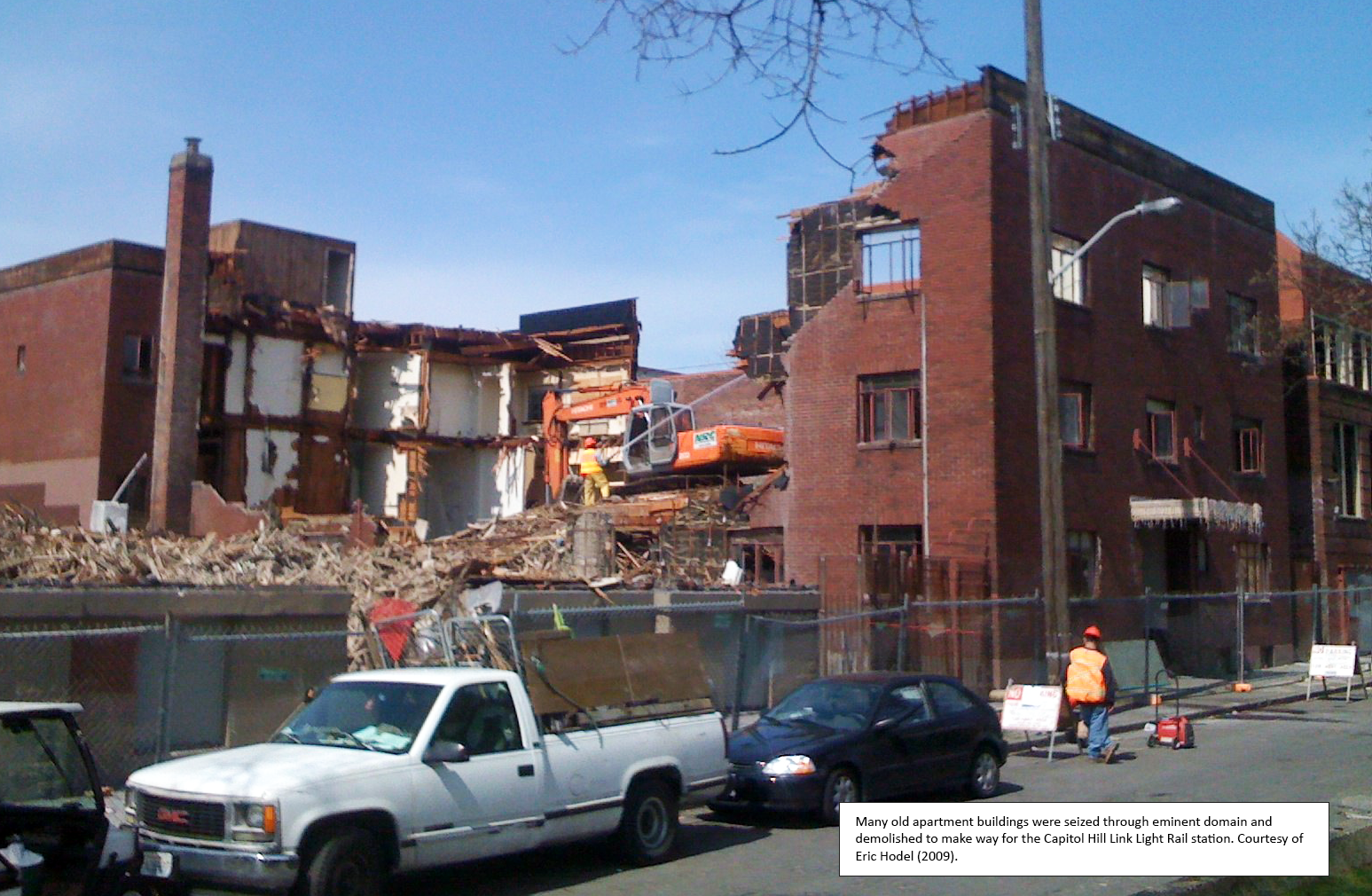
Seattle has always been a city in transition, but time between 2008 and 2014 brought rapid change. The city’s population grew by more than 67,000 people during those six years, from roughly 603,000 to nearly 671,000. The Great Recession disrupted Seattle’s economy and sharply slowed housing construction. The recovery ushered in another period of rapid growth. Amazon was growing its presence in nearby South Lake Union, bringing new highly paid jobs and residents to the city. At the same time, Seattle’s urban village strategy directed growth into dense neighborhoods. Light rail was reshaping Capitol Hill. Construction of the station began in 2009, disrupting businesses along Broadway and opening the door to an influx of transit-oriented around the station.
Capitol Hill was especially poised for change. As one of the densest urban neighborhoods west of Chicago and north of San Francisco, it was an urban village before Seattle formally designated it one. Since the 1980s, Capitol Hill had been a center of LGBTQ+ life and DIY arts and music, where affordable apartments, old houses, storefronts, garages, and performance spaces were abundant. Those conditions helped fuel the neighborhood’s grunge scene in the 1990s and its indie music scene in the 2000s.
But the foundations that allowed those communities to thrive were eroding.
Rising rents and redevelopment put pressure on longtime residents, artists and musicians, small businesses, and small cultural organizations. Low-rent housing was disappearing, along with affordable places to rehearse, perform, and gather. The question wasn’t how Capitol Hill would grow, but whether gentrification would displace the people and cultural spaces that had built its identity.
Restaurateur Linda Derschang, who opened Linda’s Tavern, later recalled what made that era possible. “We were all young and creative, and we were taking a risk opening businesses in this neighborhood,” she said. At the time, she paid less than $1,000 a month for more than 2,400 square feet.
The end of a scene: Oddfellows fades to black in 2007
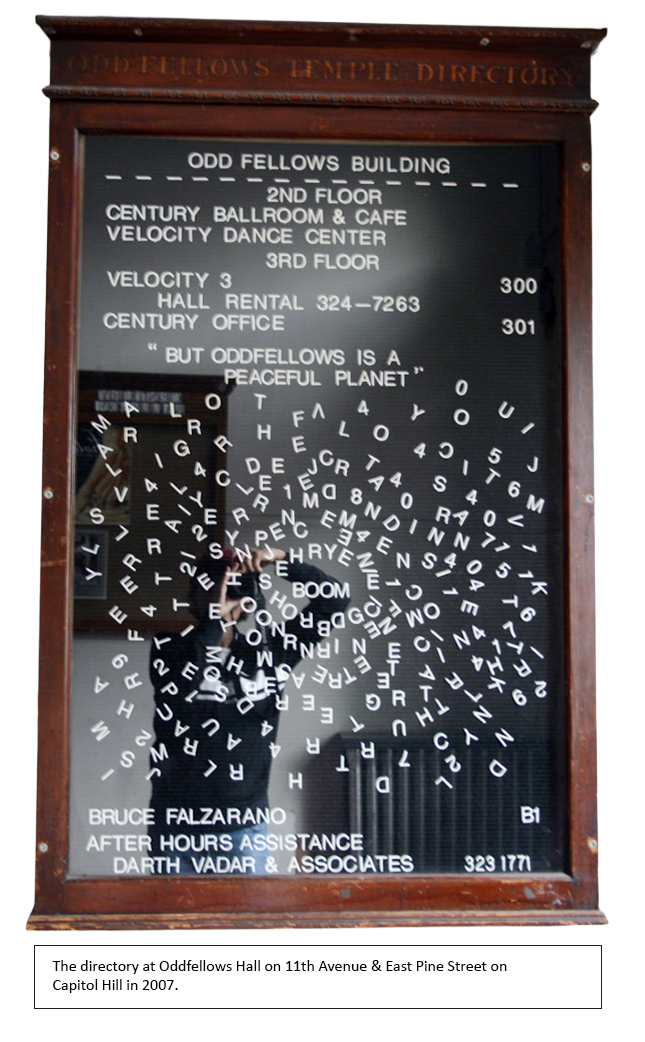
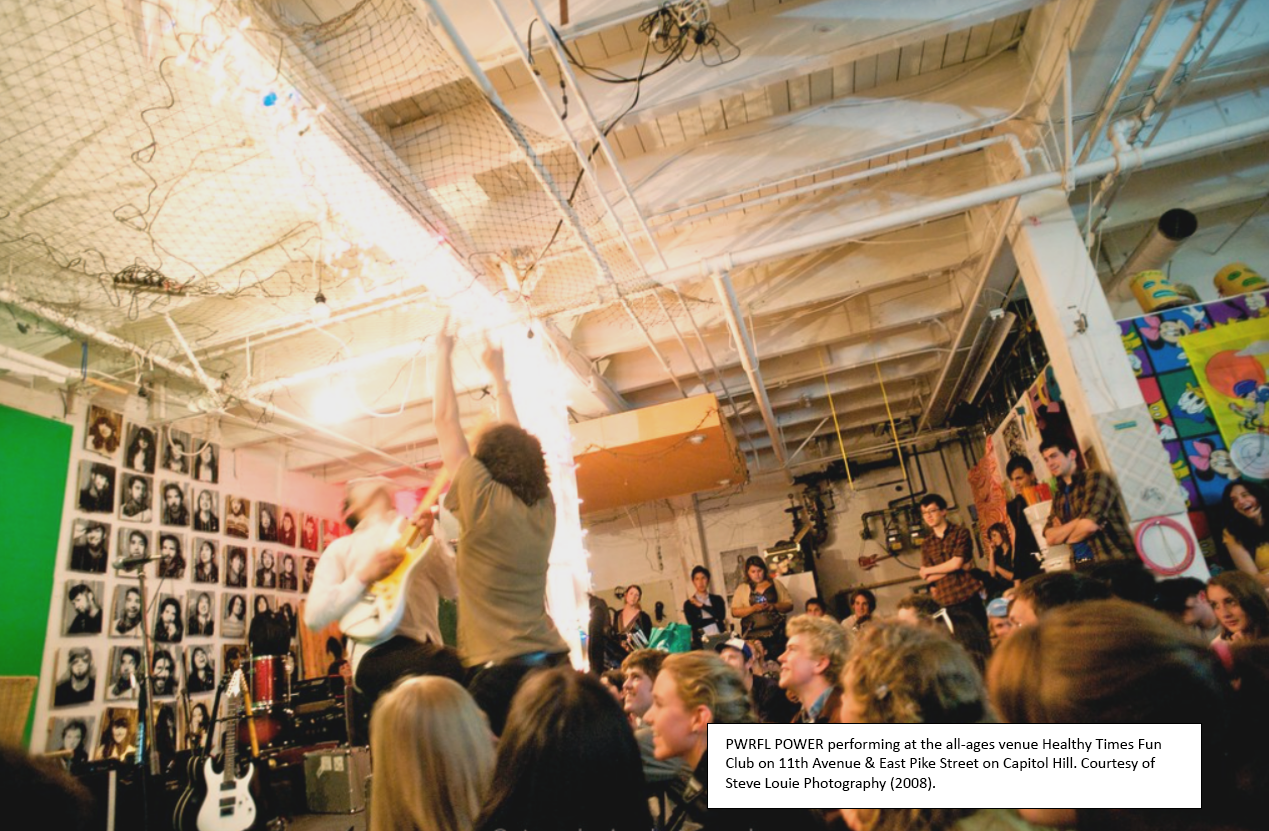
The warning signs were clear. In 2007, Oddfellows Hall — which offered affordable studios and performance space for artists and arts groups — was sold for $8.5 million. The price required the new owners to charge significantly higher rents, forcing many longtime tenants to leave. Around the same time, places like Velocity Dance Center, Capitol Hill Arts Center, Healthy Times Fun Club, and The War Room were closing or being displaced as redevelopment accelerated across Capitol Hill. Each closure raised concerns about whether the neighborhood’s creative community could still have a home there.
The loss hit a neighborhood where affordable creative spaces had long been part of its character. “After Oddfellows sold … there were a lot of meetings about ‘How do we stop this from happening again?’” recalled Michael Seiwerath, former director of the Community Roots Housing Foundation. “Everybody saw the way real estate was going on Capitol Hill.”
In early 2008, Seattle city leaders convened a series of community meetings on preserving and creating arts and cultural spaces on Capitol Hill. Those conversations helped create the Cultural Overlay District to support the neighborhood’s unique character as development continued. But a more urgent question remained: How could artists and groups replace the permanent, affordable space they were rapidly losing?
At the same time, another opportunity, and challenge, sat just a few blocks away.
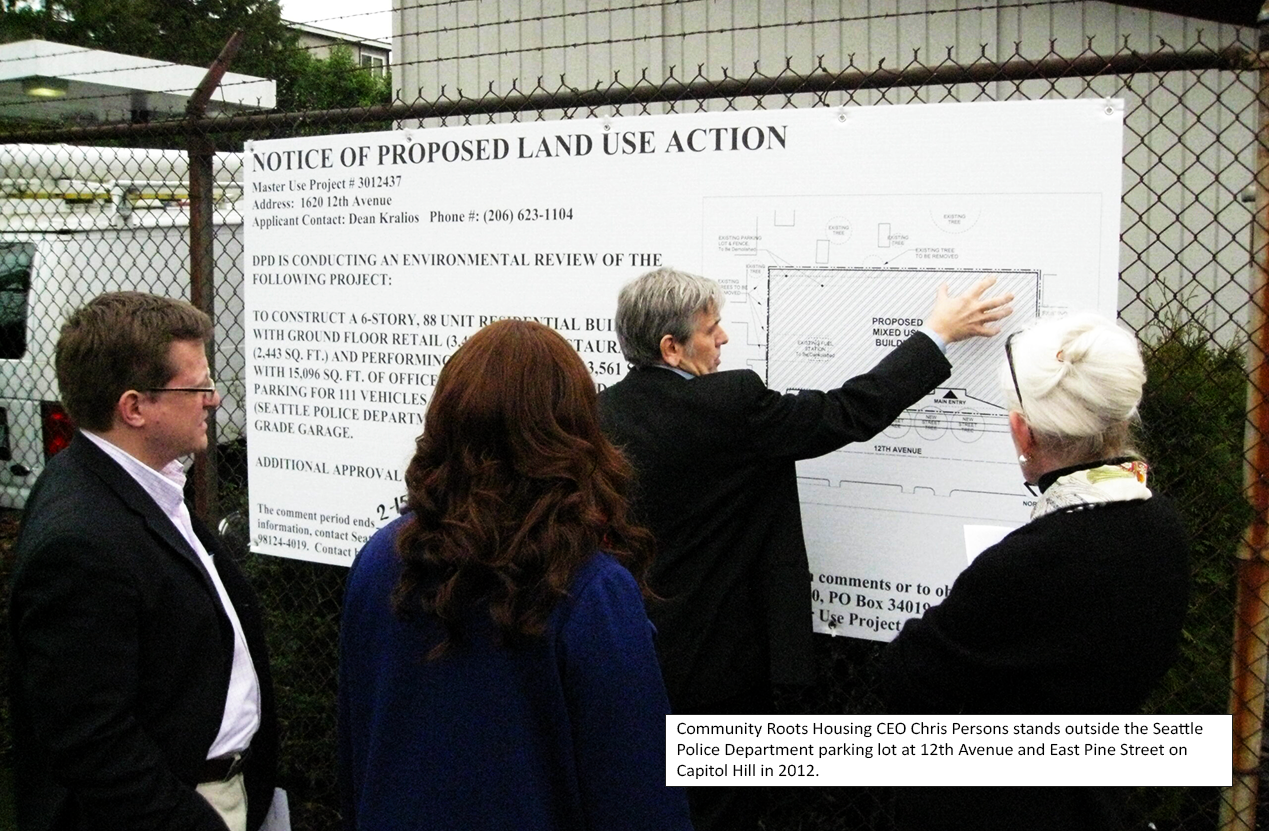
A 29,000-square-foot Seattle Police Department parking lot took up the corner of 12th Avenue and East Pine Street. For years, Capitol Hill Housing, now Community Roots Housing, had seen it as a perfect site for affordable housing. But the proposal never moved ahead. The police department used the lot for parking and fueling vehicles and said that any new project would have to replace every parking space, if not add more. The cost of building a new parking garage made a traditional affordable housing project too expensive, leaving both sides at an impasse.
The community’s demand to keep affordable arts space changed the conversation. Christopher Persons, then executive director of Community Roots, remembered going back to the unused parking lot plan with a new idea: What if affordable arts space was included in the project?
“I pulled out the file and literally dusted it off,” Christopher Persons later recalled. “I knew this was something we had to do.”
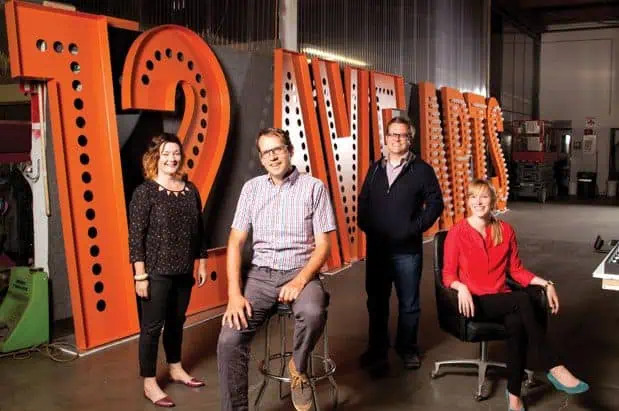
By combining permanently affordable performance and community space, affordable homes, and police parking in a single development, the project met multiple needs at once. That broader vision generated support from neighborhood leaders, arts organizations, and the city, breaking the stalemate and turning a parking lot into one of Seattle’s most innovative mixed-use developments: 12th Avenue Arts.
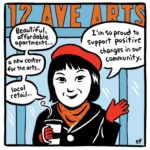
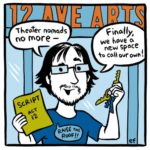
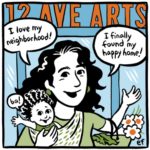
Community notes: staging 12th Avenue Arts with artists at the center
The idea that became 12th Avenue Arts did not come together behind closed doors. Capitol Hill residents remembered when affordable creative spaces helped their neighborhood thrive.
Community Roots brought in consultant Randy Engstrom to lead panels and interviews with neighborhood artists and arts organizations about the kinds of spaces they needed. In 2011, that process grew into a 12th Avenue Arts Advisory Committee including representatives from Velocity Dance Center, Annex Theatre, and Northwest Film Forum, as well as leaders from arts organizations across Seattle. Their input helped shape everything from the size of the performance spaces to how they could be used.
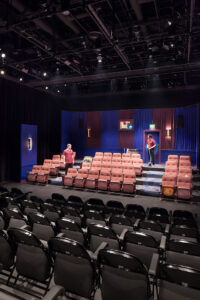
Community input reshaped the project. Early plans envisioned a single, traditional theater with 200 to 300 seats. Artists pushed back, explaining that smaller spaces would better serve Seattle’s independent performing arts community. A later proposal called for a 149-seat theater and a smaller black box, but the advisory committee continued to advocate for greater flexibility. The final design responded with two flexible black-box theaters seating approximately 80 and 150 people. These spaces could accommodate a wider range of small artists and organizations.
To succeed, the development had to accomplish much more than create affordable housing.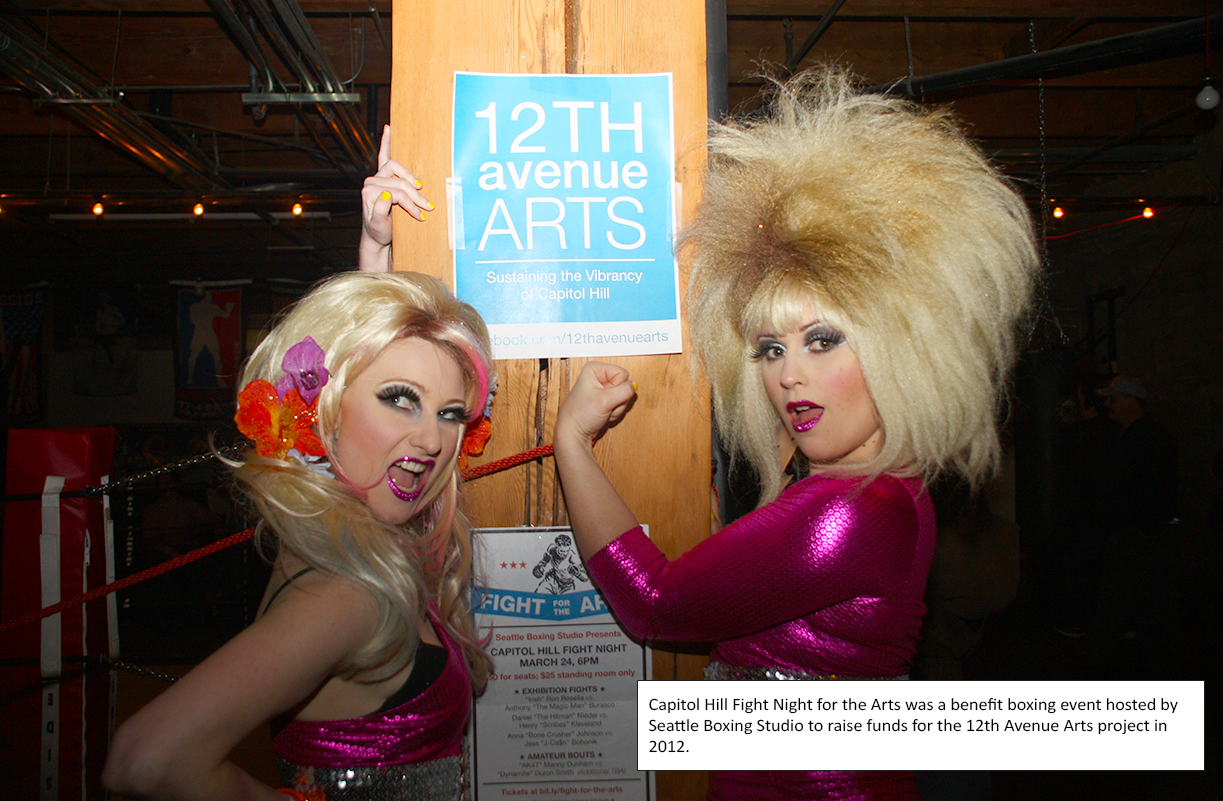
It required an equally creative financing strategy. The residential portion was financed through a combination of Low-Income Housing Tax Credits, tax-exempt bonds, and loans from the City of Seattle and the State of Washington. The commercial and arts spaces were supported by New Markets Tax Credits, a HUD Section 108 loan, commercial financing, and a community fundraising campaign.
 To bring the arts vision to life, Capitol Hill Housing raised more than $4 million through grants, state arts funding, private donations, and community fundraising. The campaign reached into the neighborhood, with local businesses and community events rallying support. The Capitol Hill Block Party, for example, gave ticket buyers a chance to donate to 12th Avenue Arts and matched those contributions up to $5,000.
Omnivorous was born during that campaign as a neighborhood food-and-drink fundraiser, giving local restaurants, businesses, and residents a way to invest in 12th Avenue Arts. It remains a celebration of the community partnerships that help bring affordable housing to life.
The marquee lights up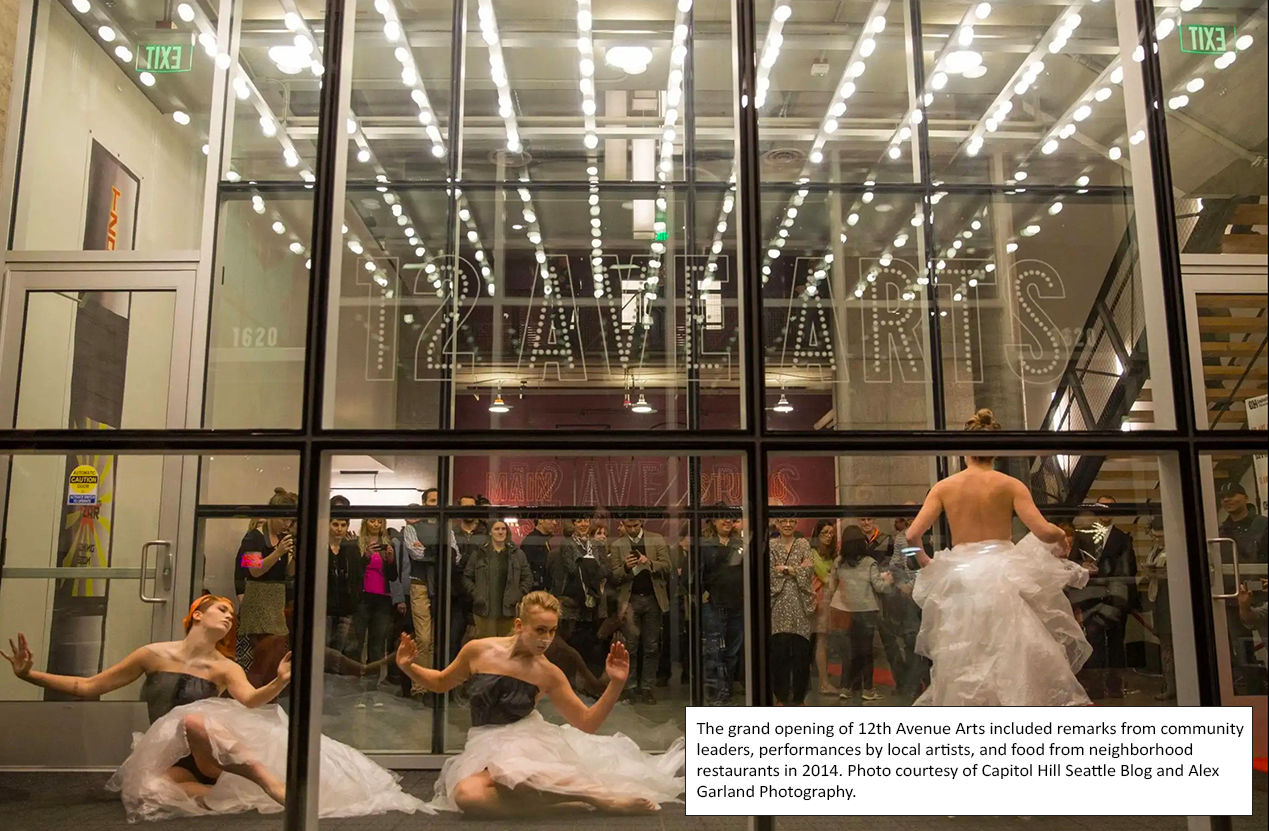
When 12th Avenue Arts opened in 2014, it transformed the surface parking lot into a mixed-use community hub.
The project proved housing development could answer multiple community needs at once. 12th Avenue Arts created 88 affordable apartments, stable space for arts organizations, offices, restaurants, gathering areas, and replacement parking for the Seattle Police Department. Theater companies gained a lasting home. Affordable housing helped low-income and working-class residents hold their ground in Capitol Hill. And underused public land became a place where housing, culture, business, and community could coexist.
Soon after becoming a 12th Avenue Arts resident in 2014, April shared, “I’m one of the many people who work in central Seattle, but couldn’t afford to live in the city. My passion is photography, which I’m hoping to turn into my own business. For the first time in my life, I can pursue my dreams while still working full time.”
A new model: responsive community-led development
Between 2008 and 2014, Seattle shifted from a relatively affordable city into the competitive metropolis we recognize today. The Amazon-led tech boom collided with the Great Recession and citywide rezoning, accelerating growth while deepening displacement. Seattle’s cycles of booms and busts are often a story of displacement: lower-income residents being pushed from the neighborhoods they had long helped shape.
12th Avenue Arts emerged from that cycle as a direct response to community concerns. That community-led development model has shaped our approach ever since. Today, we ask what each neighborhood stands to lose and what new development can help sustain. That may mean arts and green spaces, transit access, family services or other facilities rooted in community needs.
Celebrating 50 years of building a more affordable Seattle
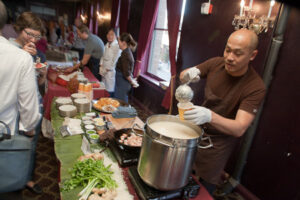
Fifty years of affordable housing work has taught Community Roots that big challenges rarely have one-dimensional solutions. On September 30, Community Roots is celebrating Omnivorous and the community spirit that helped make 12th Avenue Arts possible. Join us as we honor those who have supported this work from the roots up.