For 50 years, Community Roots Housing has worked with residents and partners to keep people rooted in Seattle. The Liberty Bank Building shows what that work can look like in a changing neighborhood. The people most affected helped shape what came next.
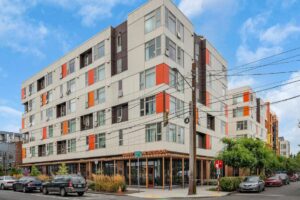
Today, the six-story building at 24th Avenue and Union Street holds 115 affordable homes and space for local, Black-owned businesses. It also carries reminders of the institution that once stood there. The story of Liberty Bank Building is about more than a new development. It asks fundamental questions: Who gets to decide what belongs in a neighborhood? What does it take for development to serve the people who already call it home?
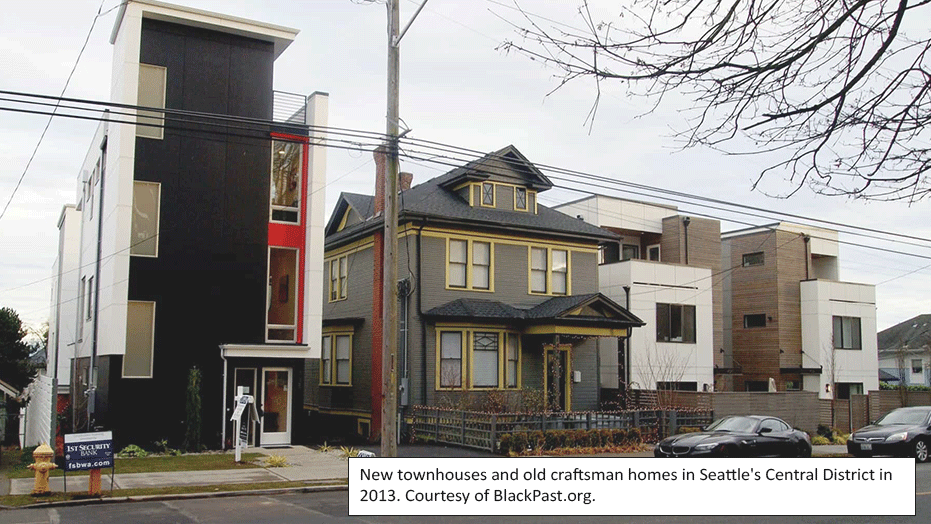
A neighborhood shaped by exclusion and resilience
Seattle’s Central District became home to much of the city’s Black community after decades of racial discrimination. Black families faced government-sanctioned limits on where they could live, buy homes, and access loans. Redlining and restrictive covenants concentrated Black residents in the neighborhood and discouraged investment. The effects did not end when those practices became illegal. As property values rose, many families had little equity to help them stay in their neighborhoods.
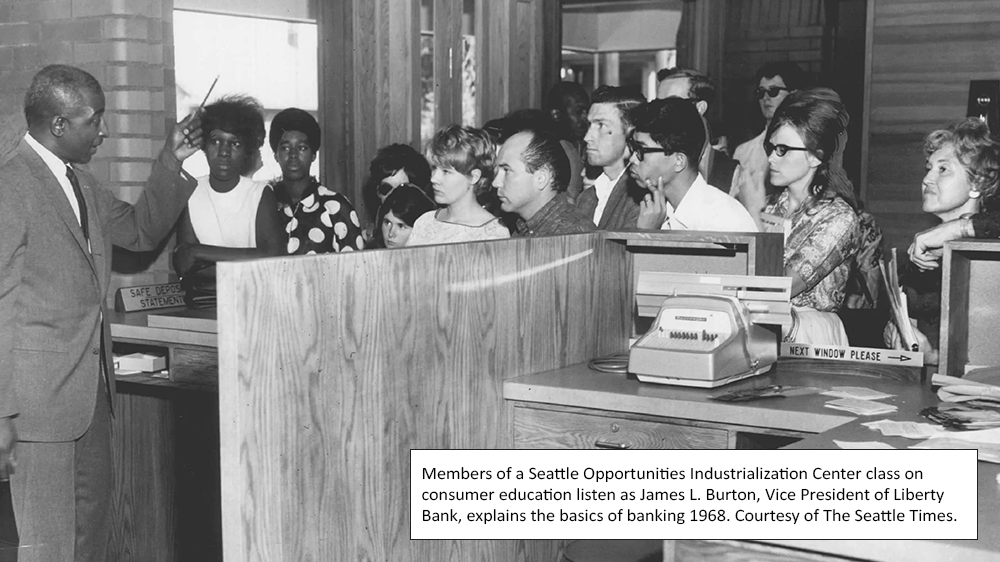
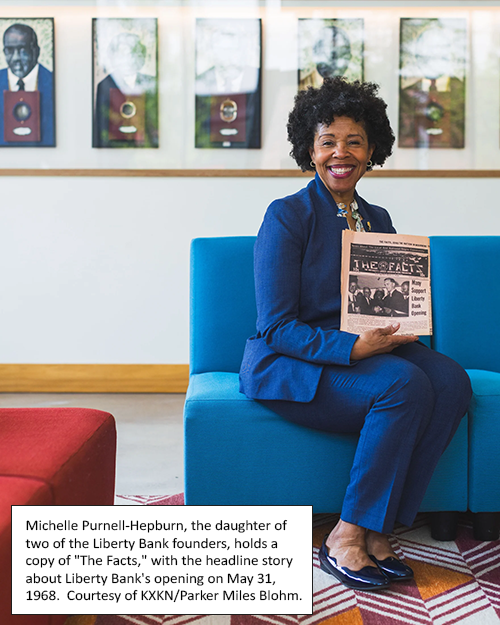
In 1968, Black community leaders opened Liberty Bank at 24th and Union. It was the first Black-owned bank in the Pacific Northwest. The bank responded to redlining and disinvestment by providing financial services to people and businesses that conventional banks had turned away. It closed in 1988, but its meaning endured.
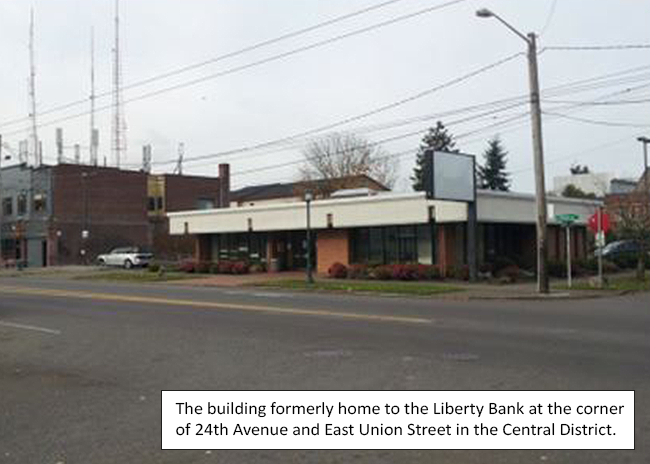 In the 2010s, redevelopment and rising housing costs were continuing to gentrify the Central District. Longtime residents, local businesses, and community organizations worried that the neighborhood’s Black history and institutions were disappearing. KeyBank offered the former bank site to Capitol Hill Housing, now known as Community Roots Housing, at below-market value for affordable housing in 2015. The community saw both an opportunity and a risk.
Many residents wanted the original building preserved. Some community members led an effort to secure historic landmark status, but the designation did not pass in 2014. The loss brought grief and frustration. Community Roots was a historically white-led organization entering a site with deep meaning for Seattle’s Black community. We had to acknowledge that position.
A community building a shared vision
The partnership began in a difficult place. Community Roots and other community organizations had been working toward different outcomes during the landmark process. Moving forward required more than a development plan. It required listening, trust, and a willingness to be accountable over years of decisions.
Community Roots convened an advisory board to guide the work. It included daughters of Liberty Bank’s founders, a former director of the bank, longtime Central District residents, community leaders, and faith leaders. Their guidance shaped how the building would carry the bank’s history through its name, architecture, art, and public spaces.
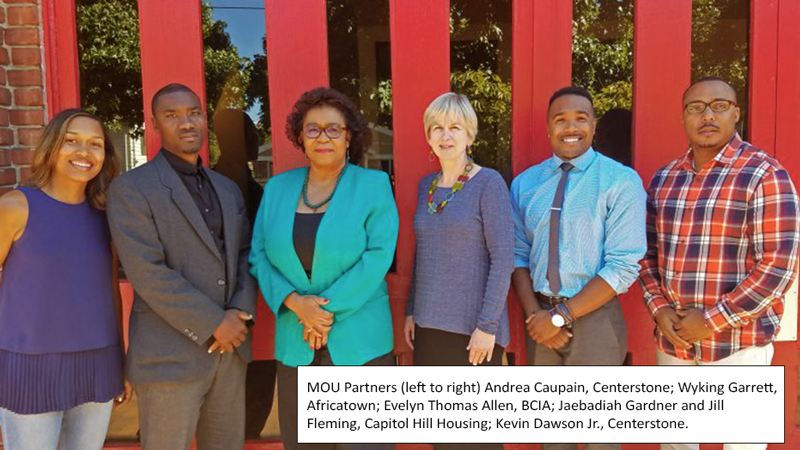
Community Roots also partnered with three Black-led community organizations: Africatown Community Land Trust, Byrd Barr Place, and the Black Community Impact Alliance. Together, the organizations created a memorandum of understanding, or MOU, to guide the project in 2016. It set priorities for affordable homes and commercial space. It also called for local and minority hiring, support for Black-owned businesses, and long-term Black community ownership. The partners wanted to reaffirm the Central District as a hub for the pan-African community. That became the project’s north star.
The agreement made community partnership central to the work. Evelyn Thomas Allen of the Black Community Impact Alliance said, “so often development is portrayed as a bad thing, but when it’s done well – when it takes into consideration the history, needs and desires of the community – it can be a powerful force for good. This partnership and plan for development should be the standard for all new developments in the Central District.”
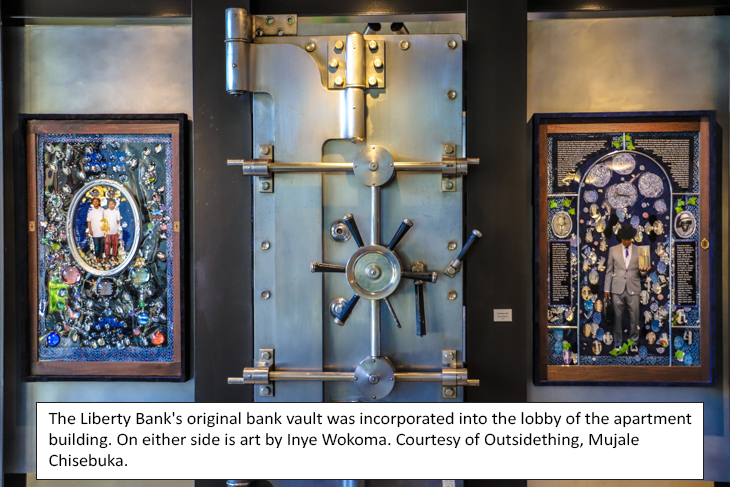
The design reflects it. The team reused the bank’s brick façade and preserved its name and original visual identity. Historic photographs, interpretive signs, and art by eight local Black artists tell stories of the bank and the Central District. The original vault door became an art piece. These choices came from community recommendations, not a standard design package.
Making opportunity part of the project
The partnership also pushed the work beyond the building itself. More than $5 million of the $16.7 million available for subcontracting went to Women- and Minority-owned Business Enterprises (WMBEs). Black-owned firms received more than $2.9 million. These results took steady attention. Partners pushed Community Roots and the general contractor to widen access. That sometimes meant finding new ways to prepare workers and businesses.
The first lease-up used affirmative marketing to reach Black residents. That included people displaced from the Central District or at risk of displacement. Community partners hosted information sessions and helped applicants understand the process. At initial lease-up, 86% of residents were African American.
Three Black-owned businesses opened on the ground floor.
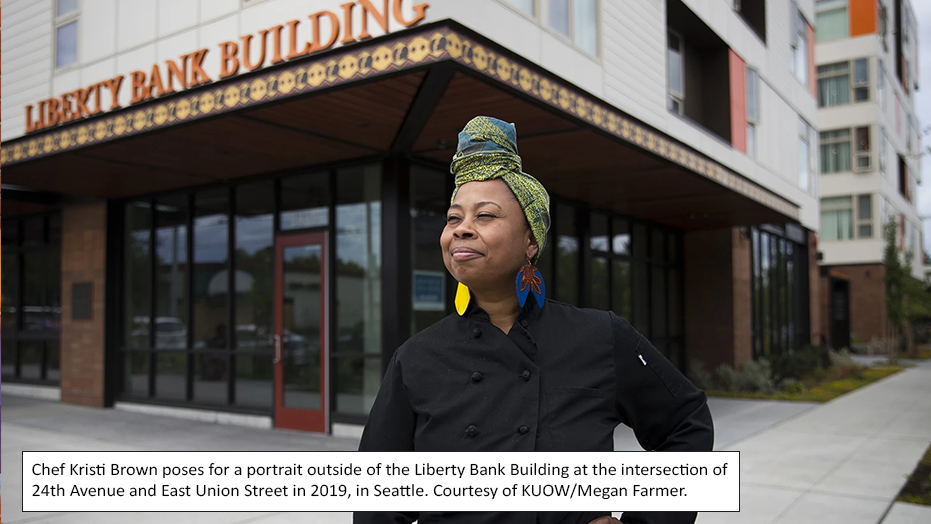
Earl’s Cuts was a neighborhood barbershop facing displacement. Communion (a perennial James Beard nominee) was the first restaurant venture from chef Kristi Brown and her son, co-owner, Damon Bomar. Café Avole brought Ethiopian coffee to the building. The spaces were offered at below-market rents to make room for local businesses to establish themselves in the building.
Building the commercial spaces required funding beyond the housing budget. Community Roots, Africatown, Byrd Barr Place, and other community organizations joined the Rise Together campaign. Rise Together raised $1.2 million for the building’s commercial spaces. Over seven years, the coalition raised more than $40 million for community-led anti-displacement projects like Africatown Plaza, Pride Place, and the White Center HUB.
The nearly $34 million development also relied on public and private financing. The City of Seattle’s Office of Housing and Washington State Housing Trust Fund provided critical loans. Heritage Bank invested tax-credit equity, and Bellwether Enterprise provided a permanent loan. Community Roots brought experience assembling complex affordable-housing financing, along with organizational capacity developed through projects such as 12th Avenue Arts.
That role came with responsibility. Community Roots recognizes that its lead developer position depended on access to financing and development systems. Those systems have long excluded many organizations of color. Building capacity with community partners became part of the project’s purpose.
A community-led development model that keeps growing
The Liberty Bank Building opened in 2019. It is a first-of-its-kind project and a learning experience for Community Roots. It showed that affordable housing can help counter displacement while supporting businesses, preserving history, and creating pathways toward community ownership.
The work is still unfolding today. Africatown Community Land Trust and Byrd Barr Place continue to shape the building’s future. In July 2026, Byrd Barr Place transferred its first right of refusal to Africatown Community Land Trust. When the tax credit investor exits the partnership in 2034, the Black-led land trust will have the first opportunity to purchase the building. The agreement advances a long-standing goal of Black community stewardship.
 The Liberty Bank Building reminds us that one project cannot stop displacement on its own. More work requires public investment, patient financing, and community organizations with the resources to lead. It requires developers willing to listen, share power, and change familiar practices when they do not serve the community.
Michelle Purnell-Hepburn, daughter of two Liberty Bank founders and an advisory board member, called it a shared legacy. “Uplifting the community was the founders’ vision and purpose.” The building carries that vision forward. Its partners continue to ask what meaningful stewardship should look like next.
Building a more affordable Seattle, together
As Community Roots Housing celebrates 50 years, Liberty Bank Building helps shape our work ahead. It shows how relationships, creativity, and long-term commitment can help a community stay rooted through change. It also shows that the best development begins with the people who know a place best.
Explore our 50-year timeline and learn more about the Liberty Bank Building. Together, we can build a Seattle where everyone has a place to call home. Every neighborhood should remain welcoming, connected, and rooted in its history.